
The 5 Significant Roles of an Engagement Manager
Employee engagement is a critical investment for any organisation that wants to thrive. It is not a corporate strategy, but a way of life for how an organisation should treat its personnel. Engaged teams have been shown to be nearly 21% more profitable, according to a recent Forbes article.
Therefore, every employee should feel that management cares about them as a person, not just as an employee. This is where an engagement manager comes in. In this blog post, we will explore the five significant roles an engagement manager plays in fostering employee engagement.
What Does an Engagement Manager Do?
An engagement manager works behind the scenes to preserve the connection between employees, employers, and the organisation. Every organisation needs someone who can channel their attention towards engaging employees, recognizing their efforts, and acquiring feedback. The engagement manager is responsible for employee retention and helps create a work environment that fosters productivity.
The 5 Roles an Engagement Manager Has to Take Up
Prior to realizing employee engagement’s significance and the need for separation, the human resources team handled it. Organisations began to recognize that disengaged employees were slow in productivity and expressed lower rates of job satisfaction. An engagement manager has many responsibilities, which can be broken down into five major roles.
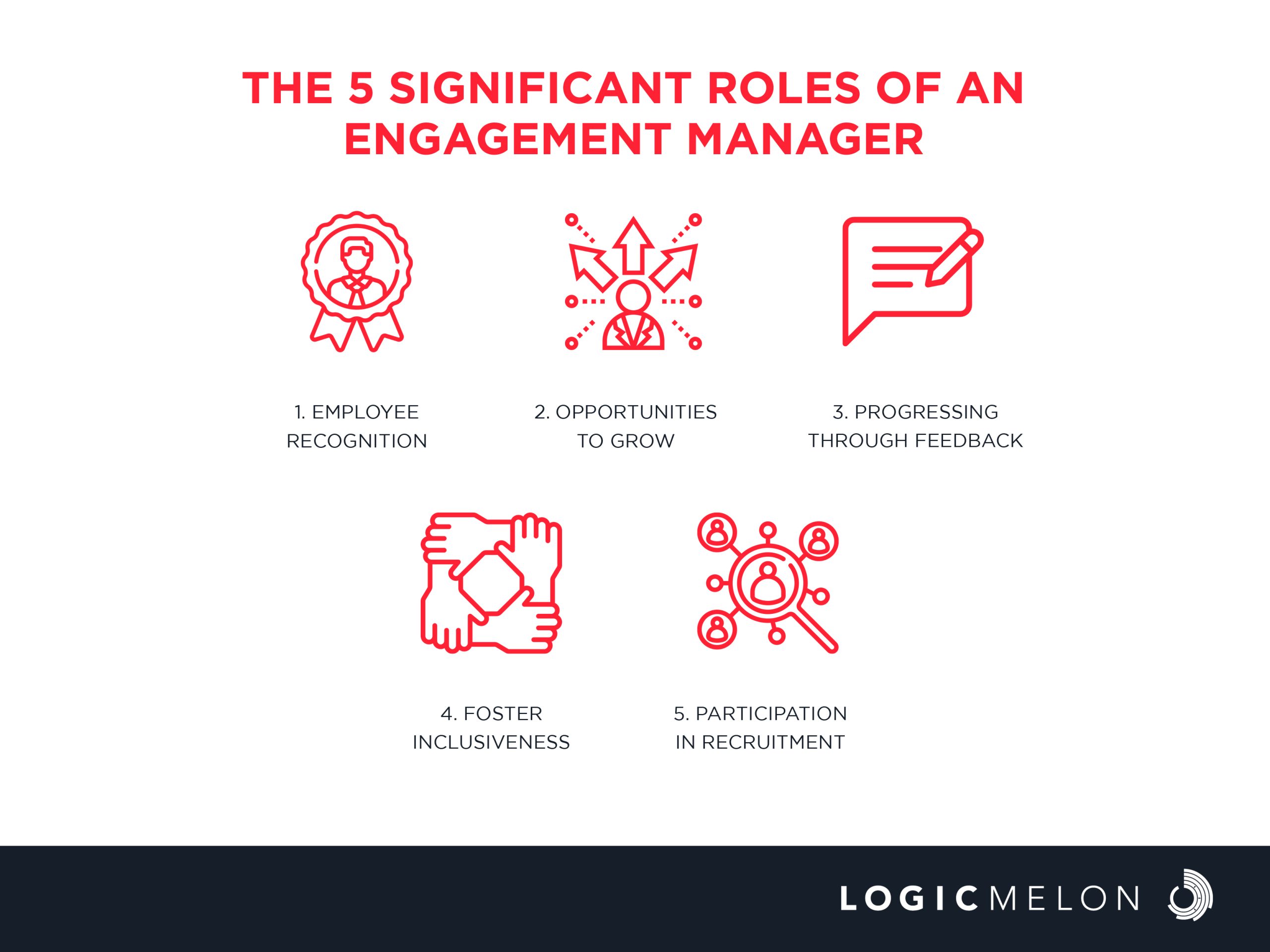
1. Employee Recognition
It is essential to appreciate employees, as they reciprocate in a thousand ways. An engagement manager must frame specific work metrics based on which employees can be evaluated. This will make room for improvement and raise the bar to a higher level. The engagement manager must propagate healthy competition among employees where everyone works to uplift each other and the organization.
2. Opportunities to Grow
An engagement manager has to look into the work lives of employees. Without growth opportunities, any job will become highly monotonous. Improving employee work-life is done by catering to their equal opportunities, aiding their career advancement, and providing scope for further learning to keep their passion alive.
3. Progressing Through Feedback
An engagement manager should help employees discover their strengths and weaknesses to help them progress. This feedback can help them reflect on how they worked in the past and how they have advanced. Employees that feel valued will work harder. Through approaches like one-on-ones, engagement managers should garner the opinions of employees regarding the organisation’s performance and ensure that their suggestions are acted upon.
4. Foster Inclusiveness
An engagement manager should be responsible for eradicating any unconscious prejudice between the employees and pushing them to compromise for each other. They should promote an inclusive culture. Multicultural organizations have a 70% higher chance of capturing new markets. Along with diversity, inclusion is another key to cultivating a better workplace.
5. Participation in Recruitment
Employee retention is crucial for any organisation. This is where an employment manager comes to the rescue. With their prior knowledge, they can aid in recruitment by providing useful insights observed through interactions with existing employees. Along with that, an engagement manager should determine if there are any red flags in the candidates gleaned from past experiences with employees.
How Pivotal is the Role of an Engagement Manager?
Paychecks cannot buy passion. It must happen by having an emotional connection with the people and the organization. Bringing about this kinship is not easy, and it occurs through a specialist given the title of an engagement manager. In this way, they strengthen ties between all those associated with the organization. While the whole organization is focused on building a relationship with the customers, an engagement manager should focus on building one with the employees first.
Frequently Asked Questions:
1. What is the difference between team leads and engagement managers?
Team leads and engagement managers are both integral parts of the company, but they differ in their roles. Team leads are responsible for reviewing and providing feedback to the employees they lead. In contrast, engagement managers go above and beyond by ensuring that the feedback is put to constructive use to improve employee engagement.
2. What are the job duties of an engagement manager?
The job of an engagement manager is critical to the success of the organisation. Their duties include monitoring turnover rates, conducting performance assessments, identifying areas for improvement, establishing the organisation’s culture, and promoting inclusiveness through various activities.
3. What are the trends in employee engagement management?
There are three recent trends in employee engagement management. Firstly, companies are focusing on creating a more engaging workplace by placing emphasis on the culture of the organisation. Secondly, the focus is on prioritising employees’ overall satisfaction to improve engagement. Lastly, there is a drive to incorporate technology and automation to help engagement managers manage employee engagement more efficiently.
4. What is the engagement rate?
The engagement rate is the percentage of employees who are highly engaged in their organisation. Both the engagement manager and the HR department are responsible for managing employee engagement. They employ various methods, such as regular surveys, feedback sessions, and team-building activities, to increase employee engagement and improve the engagement rate.
Closing Thoughts
Employees are a company’s greatest asset, and their engagement is critical to the success of the organisation. Engagement managers play an essential role in creating a healthy and fruitful work environment that nurtures employee engagement. Every company must focus on employee engagement, making their employees feel valued, respected, and an integral part of the organisation. By prioritising employee engagement, companies can create a positive work environment that benefits everyone involved.
LogicMelon
Award-winning recruitment software that will find, attract, hire and analyse the way you want to work. At LogicMelon, we have experienced software recruitment marketing specialists to help you build effective recruitment solutions supported by the best customer service you’ll find anywhere!
Email: sales@logicmelon.com or call LogicMelon (UK) +44 (0) 203 553 3667 (USA) +1 860 269 3089

8 Workplace Etiquettes Every Employee Should Know
In a work environment, it is common for employees from various cultural backgrounds to work together. When every employee comes together as a team under the same roof, employers expect excellent practices. These workplace etiquettes are necessary to ensure that every employee treats their co-workers respectfully and avoids actions that might make them uncomfortable.

Every Feature an End to End Applicant Tracking System Must Have
The entirety of the recruitment process consists of various steps and requirements. These steps require a different approach to handle them. Managing them all without any tools could be a nightmare.

Necessary HR Metrics You Should be Measuring
In an organisation, keeping track of all spending and the benefits gained from what you spend is mandatory. In that regard, organisations should also measure the work of the HR team to get a proper indication of various aspects of the employees, such as growth, retention, development, and engagement.