
Team Structure: What it is and How to Build One
Are you looking for ways to organise your team? There are different ways to organise and lead your team. The purpose of a team based structure is to determine how team members collaborate and make efforts to have continuous improvement for the company. A team structure defines the relationship between activities, leadership, and team members. Understanding which type of team structure suits your business helps build an effective team. Employees also want to understand their job responsibilities, whom they report to, what decisions they can and should make, and how they interact with other people.
Benefits of Team Structure
Having a suitable structure in teams is necessary to determine how an organisation delegates roles, responsibilities, job functions, accountability, and decision-making authority. The right team structure depends on various factors, including the size of the organisation, the number of executives, and company values.
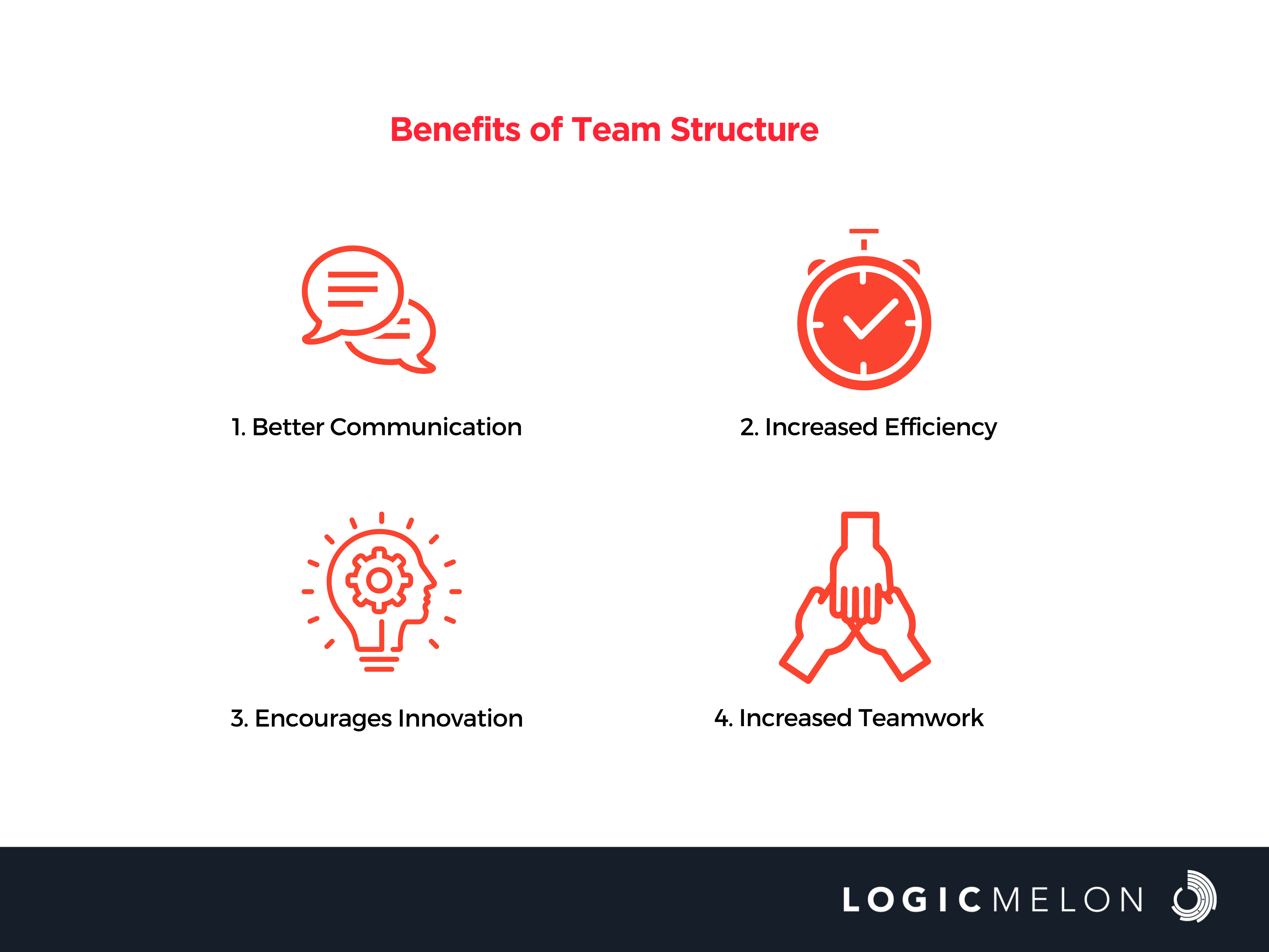
1. Better Communication
The team-based organisational structure provides adaptable channels of communication while working on a project. Communication flow is crucial to every organisation’s ability to generate ideas, convey important project information, and help people know their roles and responsibilities.
2. Increased Efficiency
Team structure increases efficiency in the workplace. When professionals communicate effectively within teams, they increase efficiency, producing results. They understand more about a project than professionals in other organisational structures.
3. Encourages Innovation
Employees should be able to explore and discuss ideas with an ideal team. An ideal team pushes team members’ limits to give their full efforts to achieve organisational goals by identifying innovative methods.
4. Increased Teamwork
Increases teamwork and effectively manages people in the team to achieve organisational goals and objectives. Teamwork helps to manage challenging situations and adapt to new clients or changes in how clients want the work done. In turn, this helps professionals improve based on suggestions and feedback from their team members.
Types of Team Structure
Organisations have different structures according to their requirements and needs.
1. Hierarchical Structure
The hierarchical structure is the most common team structure and happens to be effective for any team. A hierarchical structure is like a pyramid-like structure with executives, directors, managers, and employees in order from the highest level to the lowest level.
Best for teams looking for career paths and specialisation in individual teams.
2. Circular Structure
A circular structure follows a hierarchical structure. Top-level management is inside the circle; lower-level members occupy the outer circles. The executive leadership level is shown inside the circle. This team member is used when an organisation needs streamlined communication, an easy flow of information, and fluid relationships.
Best for teams looking for priority meetings and free flow of communication.
3. Matrix Structure
A matrix structure uses this structure to create a balance between leadership and the decision-making process. This team structure is organised in a grid format. The team members report to more than one manager.
Best for teams looking to Collaboration, communication and balance in leadership.
4. Functional Structure
The team structure is based on their skills and knowledge. These groups are vertically structured, from the president to individual team members.
Best for teams looking to organisation growth and accountability for work.
5. Market-Based Structure
Market-based structures are organisations with multiple brands under one umbrella company or vastly different goods and services. This structure is best for teams looking for the ability to focus on one market at a time, team specialisation, and individual accomplishments.
It is best for teams looking for the ability to focus on one market and market specialisation.
6. Process-Based Structure
This structure is best for organisations looking to increase their efficiency, organisational growth, and assistance with many different processes. A process-based structure is preferred by the organisation that views an organisation as process-based, managing to achieve a desired result.
Best for teams looking for efficiency and smoother transition in the process
7. Geographical-Based Structure
This is a divisional structure that focuses on geographical areas. The regions are organised into separate divisions, creating clear boundaries and logistics across geographies. It is primarily suited for organisations that require work to be done by external teams, have various global teams, and even have multiple businesses.
Best for teams looking to team collaboration and serve local communities.
8. Product-Focused Structure
A divisional structure is one that groups each function into a separate division.
Best for teams looking for continuous product improvements and developments and semi-autonomous divisions.
Frequently Asked Questions
1. How do you choose the best team structure for an organisation?
Team structures are framed according to the needs of an organisation. So, each and every organisation has a different team structure according to their requirements. Selecting the best team structure helps organisations manage a team effectively and efficiently.
2. What are the benefits of a team structure?
The benefits of an effective team structure are better communication, increased efficiency, innovation, and teamwork.
3. How does team structure encourage innovation?
The professionals working closely with the teams feel empowered to bring ideas to their team leaders and management professionals in the organisation.
Closing Thoughts
Now that you have a clear understanding of team structure, you can frame your team structure according to your organisation’s requirements. Incorporate an effective team structure suitable for your team members and projects. An effective team structure aligns with the business strategy, ensuring that the right people assemble to achieve the organisational objectives. The benefit that team-based structures provide to businesses is that they foster a larger sense of community within the organisation. Understand the project requirements and align work accordingly to frame an effective team structure for your organisation.
LogicMelon
Award-winning recruitment software that will find, attract, hire and analyse the way you want to work. At LogicMelon, we have experienced software recruitment marketing specialists to help you build effective recruitment solutions supported by the best customer service you’ll find anywhere!
Email: sales@logicmelon.com or call LogicMelon (UK) +44 (0) 203 553 3667 (USA) +1 860 269 3089

Lessons Learned as a Hiring Manager
At this time of year, it’s often a great time for reflection (and for getting to all of those jobs you’ve not had time to do). As I started to plan out the summer reflection, I got to thinking about what I’ve learned this past 12 months. Besides working on a number of great projects, I’ve also been reminded of the experiences I’ve had throughout my career as both a job seeker and hiring manager, and the lessons I’ve learned along the way.

TEAM: Only Real Leaders May Apply
Over the past few weeks I’ve been looking long and hard at my own skill set as we embark on a new chapter of growth at LogicMelon. As the business is set to transform, I’ve found myself wondering about my role in helping the business get to the next level, more specifically I want to make sure we have the best people in the right place to help us to achieve all we can – and that includes me.

Personal vs. Corporate Brand
The power of brand is undisputable. It is estimated that 7.1 billion people across the world recognise the Coca-Cola logo – that is 94% of the population of earth. Meanwhile, an academic study has found that children under five routinely recognise brands including Disney, Shell and Warner Brothers. While the fact that 93% of the tots studied recognised the McDonald’s logo may not be altogether surprising, the finding that Toyota was also familiar to 80% of those quizzed highlights the strength and reach of a well-honed brand.